サイズチャート
インターナショナルサイズチャート


Men's Pants Size Guide: Waist, Inseam, and the Perfect Fit
Getting the right pants size is one of the most important aspects of men's wardrobe. Ill-fitting pants can undermine even the most carefully put-together outfit. This guide covers everything from measuring your waist and inseam to understanding the different sizing systems used around the world.
Key Measurements for Men's Pants
Waist: Measure around your natural waistline, typically at the narrowest point above your hips. For pants that sit at the hip rather than the natural waist, measure where the waistband will actually sit. Add about 1 to 2 inches of ease for comfort.
Inseam: Measure from the crotch seam down the inside of your leg to where you want the pants to end. For dress pants, this is typically at the top of the shoe heel. For casual pants, it depends on your preferred break (no break, slight break, or full break).
Hip circumference: Measure around the fullest part of your hips and seat. This is especially important for slim-fit and tailored pants.
Thigh circumference: Measure around the fullest part of your upper leg, about 2 inches below the crotch. This ensures the pants are comfortable when sitting or walking.
Rise: The distance from the crotch seam to the top of the waistband. Low rise sits below the natural waist, mid rise sits at the waist, and high rise sits above the waist.
Understanding Men's Pants Size Labels
Men's pants are typically labeled with two numbers: waist size by inseam length, both in inches. For example, "34/32" means a 34-inch waist and a 32-inch inseam. Common waist sizes range from 28 to 44 inches, and inseam lengths from 28 to 36 inches.
Some brands, especially for casual and athletic pants, use S/M/L sizing. A size Small typically fits a 28-30 inch waist, Medium fits 32-34, Large fits 36-38, X-Large fits 40-42, and XX-Large fits 44-46.
Men's Pants Size Conversion
International conversions for men's pants: US waist 30 = UK 30 = EU 46 = IT 46 | US 32 = UK 32 = EU 48 = IT 48 | US 34 = UK 34 = EU 50 = IT 50 | US 36 = UK 36 = EU 52 = IT 52 | US 38 = UK 38 = EU 54 = IT 54 | US 40 = UK 40 = EU 56 = IT 56
Common Mistakes and How to Avoid Them
Many men measure their actual body waist but forget to account for where the pants will actually sit. Others ignore the rise, which dramatically affects how the pants look and feel. A common error is buying pants based on vanity sizing, where brands label larger pants with smaller size numbers. Always check the actual measurements, not just the label.
Frequently Asked Questions About Men's Pants Sizes
What is the average men's pants size? The average men's pants size in the United States is a 36-inch waist with a 32-inch inseam.
How do I measure my inseam without a tape measure? Take a well-fitting pair of pants and measure from the crotch seam to the bottom of the leg along the inner seam.
What is vanity sizing? Vanity sizing is the practice of labeling pants with a smaller waist measurement than the actual garment. A pair of pants labeled as 34 inches might actually measure 35 or 36 inches. This is why checking actual garment measurements is important.
Men's Pants Size Chart
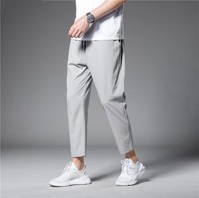
| Size | XS | S | M | L | XL | XXL | 3XL | 4XL |
|---|---|---|---|---|---|---|---|---|
| EU / IT | 44 | 46 | 48 | 50 | 52 | 54 | 56 | 58 |
| UK | 28" | 30" | 32" | 34" | 36" | 38" | 40" | 42" |
| US | 28" | 30" | 32" | 34" | 36" | 38" | 40" | 42" |
| Waist Size | 78.5cm | 82.5cm | 86.5cm | 90.5cm | 94.5cm | 98.5cm | 102.5cm | 106.5cm |
| Waist Size | 31" | 32.5" | 34" | 35.5" | 37.25" | 38.75" | 40.25" | 42" |
| Hip Size | 91cm | 95cm | 99cm | 103cm | 107cm | 111cm | 115cm | 119cm |
| Hip Size | 35.75" | 37.5" | 39" | 40.5" | 42.25" | 43.75" | 45.25" | 46.75" |
| Men's Pants Size Chart Maker : iSizeChart.com | ||||||||
About Men's Pants Size Guide Chart
How to choose suitable pants for different social occasions for men?
Choosing the right pants for different social occasions requires balancing style, formality, comfort, and context. Here’s a tailored guide for men:
1. Formal Events (Black Tie, Weddings, Galas).
Fit: Slim or classic fit, no cuffs (for tuxedos); High-rise with a flat front or single pleat (for dress pants).
Color: Black, charcoal, or midnight blue (formal); Light gray or navy (semi-formal daytime events).
Avoid: Jeans, chinos, or anything wrinkled.
2. Business Formal (Office, Interviews, Meetings).
Fit: Straight or slim-fit (no bagginess); Hemmed to break slightly at the shoe (no pooling).
Color: Charcoal, navy, or medium gray; Tan or light gray (less formal offices).
Pair With: Dress shirts, blazers, oxfords.
Avoid: Loud patterns, joggers, or denim.
3. Business Casual (Office, Networking).
Fit: Slim or straight fit (avoid overly tight or loose).
Color: Khaki, olive, navy, or muted tones; Subtle patterns (e.g., herringbone).
Pair With: Polo shirts, button-downs, loafers.
Avoid: Sweatpants, cargo pants, or shorts.
4. Smart Casual (Dinner Dates, Cocktail Parties).
Fit: ① Jeans: Slim or straight (no sagging). ② Trousers: Lightweight, slightly relaxed.
Color: Indigo, black (jeans); Beige, white, or pastels (linen).
Pair With: Blazers, tucked-in shirts, Chelsea boots.
Avoid: Athletic wear or overly distressed denim.
5. Casual Outings (Brunch, Shopping, Walks).
Fit: Relaxed but tailored (no baggy cargoes).
Color: Blue, black, or gray (jeans); Olive, tan (cargos).
Pair With: T-shirts, sneakers, hoodies.
Avoid: Pajama pants or gym shorts.
6. Summer/Beach Events.
Fit: Loose but structured (linen wrinkles naturally).
Color: White, beige, light blue.
Pair With: Loafers, short-sleeve shirts.
Avoid: Heavy fabrics like denim or wool.
7. Night Out (Clubs, Bars).
Fit: Body-hugging but stretchy (for movement).
Color: Black, deep red, or metallic tones.
Pair With: Statement shirts, dressy sneakers.
Avoid: Athletic shorts or dad jeans.
8. Travel/Comfort-Focused.
Fit: Relaxed waistband, tapered leg.
Color: Neutral tones (gray, navy).
Pair With: Knit polos, slip-on shoes.
Avoid: Stiff fabrics or tight fits.
Key Rules to Remember:
Fabric Dictates Formality: Wool/silk = Formal; Cotton/linen = Casual; Polyester blends = Practical (e.g., travel).
Fit Is King: Always prioritize proportions over trends.
Shoes Matter: Match pants to footwear (e.g., dress pants with oxfords, joggers with sneakers).