サイズチャート
インターナショナルサイズチャート


Finding the correct ring size ensures a comfortable fit that won't slip off or feel too tight. Ring sizing systems vary by country, and even small differences in measurement can result in an uncomfortable fit. This comprehensive guide helps you determine your perfect ring size with confidence.
How to Measure Your Ring Size at Home
Method 1: Using an Existing Ring (Most Accurate)
Take a ring that fits well on the intended finger. Place it on a ruler and measure the inside diameter in millimeters. Compare this measurement to our size chart to find your corresponding ring size. This is the most reliable home measurement method.
Method 2: Using a String or Paper Strip
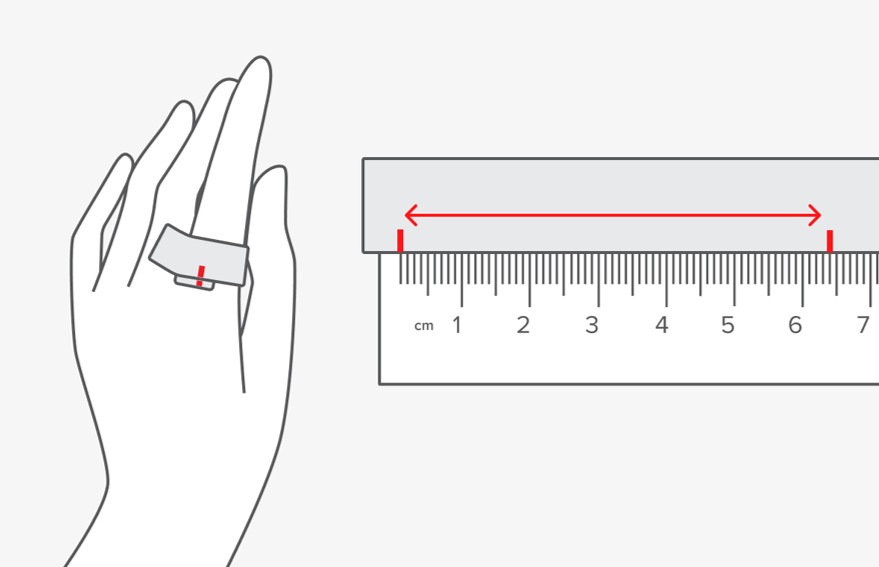
Cut a thin strip of paper about 4 inches long and 1/4 inch wide. Wrap it around the base of your finger where the ring will sit. Mark where the ends overlap with a pen. Unwrap and measure the length in millimeters - this is your finger circumference. Match it to our chart.
Method 3: Professional Measurement
Visit a jewelry store for the most accurate measurement. Professional ring sizers account for knuckle size, finger shape, and temperature variations. This is recommended for expensive rings like engagement rings.
International Ring Size Systems
US/Canada: Uses alphabetical sizes from A to Z, with half sizes available (A, A.5, B, B.5...). Most common women's sizes are 5-7, and men's sizes are 9-11. Size Z is approximately 27.6mm diameter.
UK/Australia: Uses letters A-Z with half sizes. UK sizes are approximately half a letter larger than US sizes for the same finger. A US size 7 equals a UK size N.5.
EU/Germany: Uses the inner circumference in millimeters minus 40. For example, a 52mm circumference equals EU size 12. EU sizes range from 44 to 74.
Japan: Uses numeric sizes from 1 to 27, based on the inner circumference in millimeters. Japanese size 9 equals approximately US size 6.5.
Important Tips for Ring Sizing
Measure at the right time: Measure your finger at the end of the day when it's at its largest. Fingers are smallest in the morning and after exercise.
Consider temperature: Avoid measuring when your hands are cold, as fingers shrink in cold temperatures. Warm hands give the most accurate measurement.
Account for knuckle size: If your knuckle is significantly larger than your finger base, choose a size that fits over your knuckle comfortably. The ring should slide over with slight resistance.
Consider ring width: Wider bands (over 6mm) require a slightly larger size - typically half a size up. Narrow bands fit true to size.
Ring Size and Finger Changes
Your ring size can change over time due to weight fluctuations, pregnancy, aging, arthritis, and temperature. Most people's ring size changes by half a size over their lifetime. Re-measure every few years or before purchasing an expensive ring.
Frequently Asked Questions
What if my knuckle is larger than my finger base?
Choose a size that fits over your knuckle comfortably. The ring should slide over with slight resistance but not feel loose at the base. Consider a ring with a comfort fit (slightly rounded inside) for easier wear.
Do ring sizes change over time?
Yes. Weight changes, pregnancy, aging, and temperature can all affect your ring size. Re-measure every few years or before purchasing an expensive ring. Many jewelers offer free resizing within the first year.
How do I measure for a surprise gift?
Borrow a ring they already wear on the intended finger and measure its inside diameter. Alternatively, trace the inside of the ring on paper. If neither is possible, choose a slightly larger size - resizing smaller is easier than resizing larger.
Ring Size Chart
| Inside Diameter | Inside Circumference | Ring Size | |||||||
|---|---|---|---|---|---|---|---|---|---|
| inches | mm | inches | mm | US, Canada, Mexico |
UK, Australia, Ireland, New Zealand, South Africa |
France | Germany, Russia, Ukraine, Asia |
India, China, Japan, South America, Turkey, Israel |
Italy, Spain, Netherlands, Switzerland |
| 0.554 | 14.07 | 1.74 | 44.2 | 3 | F | 44 | 14 | 4 | 4 |
| 0.563 | 14.31 | 1.77 | 44.8 | 3.25 | F1/2 | 44.625 | 14.25 | - | 4.625 |
| 0.57 | 14.48 | 1.79 | 45.5 | 3.5 | G | 45.25 | 14.5 | 5 | 5.25 |
| 0.58 | 14.72 | 1.82 | 46.1 | 3.75 | G1/2 | 45.875 | 14.75 | 6 | 5.875 |
| 0.586 | 14.88 | 1.84 | 46.8 | 4 | H | 46.5 | 15 | 7 | 6.5 |
| 0.596 | 15.13 | 1.87 | 47.4 | 4.25 | H1/2 | 47.125 | 15.25 | - | 7.125 |
| 0.602 | 15.29 | 1.89 | 48 | 4.5 | I | 47.75 | 15.5 | 8 | 7.75 |
| 0.611 | 15.53 | 1.92 | 48.7 | 4.75 | J | 48.375 | - | - | 8.375 |
| 0.618 | 15.69 | 1.94 | 49.3 | 5 | J1/2 | 49 | 15.75 | 9 | 9 |
| 0.627 | 15.94 | 1.97 | 50 | 5.25 | K | 49.625 | 16 | - | 9.625 |
| 0.634 | 16.1 | 1.99 | 50.6 | 5.5 | K1/2 | 50.25 | 16.25 | 10 | 10.25 |
| 0.643 | 16.34 | 2.02 | 51.2 | 5.75 | L | 50.875 | - | 11 | 10.875 |
| 0.65 | 16.5 | 2.04 | 51.9 | 6 | L1/2 | 51.5 | 16.5 | 12 | 11.5 |
| 0.66 | 16.74 | 2.07 | 52.5 | 6.25 | M | 52.125 | 16.75 | - | 12.125 |
| 0.666 | 16.91 | 2.09 | 53.1 | 6.5 | M1/2 | 52.75 | 17 | 13 | 12.75 |
| 0.675 | 17.15 | 2.12 | 53.8 | 6.75 | N | 53.375 | - | - | 13.375 |
| 0.682 | 17.31 | 2.14 | 54.4 | 7 | N1/2 | 54 | 17.25 | 14 | 14 |
| 0.691 | 17.55 | 2.17 | 55.1 | 7.25 | O | 54.625 | 17.5 | - | 14.625 |
| 0.697 | 17.72 | 2.19 | 55.7 | 7.5 | O1/2 | 55.25 | 17.75 | 15 | 15.25 |
| 0.707 | 17.96 | 2.22 | 56.3 | 7.75 | P | 55.875 | - | - | 15.875 |
| 0.713 | 18.12 | 2.24 | 57 | 8 | P1/2 | 56.5 | 18 | 16 | 16.5 |
| 0.723 | 18.36 | 2.27 | 57.6 | 8.25 | Q | 57.125 | 18.25 | - | 7.125 |
| 0.729 | 18.52 | 2.29 | 58.3 | 8.5 | Q1/2 | 57.75 | 18.5 | 17 | 17.75 |
| 0.739 | 18.77 | 2.32 | 58.9 | 8.75 | R | 58.375 | 18.75 | - | 18.375 |
| 0.745 | 18.93 | 2.34 | 59.5 | 9 | R1/2 | 59 | 19 | 18 | 19 |
| 0.755 | 19.17 | 2.37 | 60.2 | 9.25 | S | 59.625 | 19.25 | - | 19.625 |
| 0.761 | 19.33 | 2.39 | 60.8 | 9.5 | S1/2 | 60.25 | 19.5 | 19 | 20.25 |
| 0.771 | 19.58 | 2.42 | 61.4 | 9.75 | T | 60.875 | 19.75 | - | 20.875 |
| 0.777 | 19.74 | 2.44 | 62.1 | 10 | T1/2 | 61.5 | 20 | 20 | 21.25 |
| 0.787 | 19.98 | 2.47 | 62.7 | 10.25 | U | 62.125 | 20.25 | 21 | 22.125 |
| 0.793 | 20.14 | 2.49 | 63.4 | 10.5 | U1/2 | 62.75 | 20.5 | 22 | 22.75 |
| 0.803 | 20.38 | 2.52 | 64 | 10.75 | V | 63.375 | - | - | 23.375 |
| 0.81 | 20.55 | 2.54 | 64.6 | 11 | V1/2 | 64 | 20.75 | 23 | 24 |
| 0.818 | 20.79 | 2.57 | 65.3 | 11.25 | W | 64.625 | - | - | 24.625 |
| 0.825 | 20.95 | 2.59 | 65.9 | 11.5 | W1/2 | 65.25 | 21 | 24 | 25.25 |
| 0.834 | 21.19 | 2.62 | 66.6 | 11.75 | X | 65.875 | - | - | 25.875 |
| 0.844 | 21.44 | 2.65 | 67.2 | 12 | X1/2 | 66.5 | 21.25 | 25 | 26.5 |
| 0.854 | 21.68 | 2.68 | 68.1 | 12.25 | Y | 67.125 | 21.5 | - | 27.125 |
| 0.863 | 21.92 | 2.71 | 68.5 | 12.5 | Z | 67.75 | 21.75 | 26 | 27.72 |
| 0.866 | 22 | 2.72 | 69.1 | 12.75 | Z1/2 | 68.375 | - | - | 28.375 |
| 0.876 | 22.25 | 2.75 | 69.7 | 13 | - | 69 | 22 | 27 | 29 |
| Ring Size Chart Maker : iSizeChart.com | |||||||||
About Ring Size Guide Chart
How to choose the appropriate size of ring ?
Choosing the right ring size is essential for comfort and ensuring the ring fits properly. Here’s a guide to help you determine the correct size:
1. Measure Your Finger at the Right Time.
Measure your finger when it’s at a normal temperature (avoid extreme cold or heat).
2. Use a Ring Sizer (Most Accurate Method).
Use a plastic ring sizer (available online or at jewelry stores) for an accurate measurement.
3. DIY Methods at Home.
Existing Ring Method: Place a well-fitting ring on a ruler and measure the inner diameter (in mm), then match it to a sizing chart.
4. Consider Ring Width & Shape.
Knuckle size matters—if your knuckle is bigger, you may need a size that fits over it but stays snug at the base.
5. International Sizing Differences.
Check a conversion chart if buying from another country.
6. Special Cases.
Surprise Proposal: Borrow one of their rings (from the correct finger) or ask their friends/family for help.
7. Test Before Finalizing.
It shouldn’t easily slip off when shaking your hand.