internationale Größentabelle


A well-fitting jacket combines style, comfort, and functionality. Jacket sizing involves chest, shoulder, and sleeve measurements that vary between casual and formal styles.
Key Jacket Measurements
Chest: Measure around the fullest part of your chest, under the arms. This is the primary jacket size determinant.
Shoulder Width: Measure from the edge of one shoulder to the other across the back. Critical for jacket fit and comfort.
Sleeve Length: Measure from the shoulder seam to the wrist bone. Jacket sleeves should end at the wrist bone, showing 1/4 inch of shirt cuff.
Length: Measure from the base of the neck to the desired jacket length. Standard jackets end at the hip bone.
Jacket Types and Fit
Bomber Jacket: Short length, elastic cuffs and hem. Casual style. Size based on chest measurement.
Leather Jacket: Should fit snugly when new - leather stretches with wear. Size based on chest measurement.
Winter Coat: Should allow room for layering. Consider sizing up if you plan to wear thick sweaters underneath.
Rain Jacket: Should allow room for layers but not be too loose. Look for adjustable cuffs and hem.
International Jacket Size Systems
US: Based on chest measurement in inches (38, 40, 42...). Letter sizes (S, M, L, XL) are also common for casual jackets.
EU: Based on chest measurement in cm divided by 2 (EU 50 = chest 100cm = US 40).
UK: Similar to US sizing for men's jackets. Women's jackets use different numbering systems.
Frequently Asked Questions
Should I size up for a winter jacket?
Yes, if you plan to layer thick sweaters underneath. For lightweight jackets that will be worn over a shirt, stick to your regular size.
How should a leather jacket fit?
A new leather jacket should feel snug but not restrictive. It will stretch 5-10% with wear. If it's comfortable when new, it will be too loose after breaking in.
Jacket Size Chart
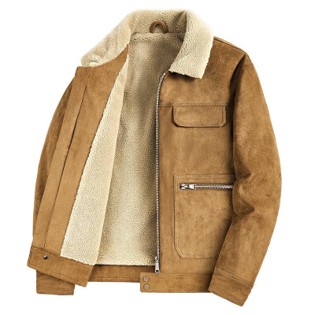
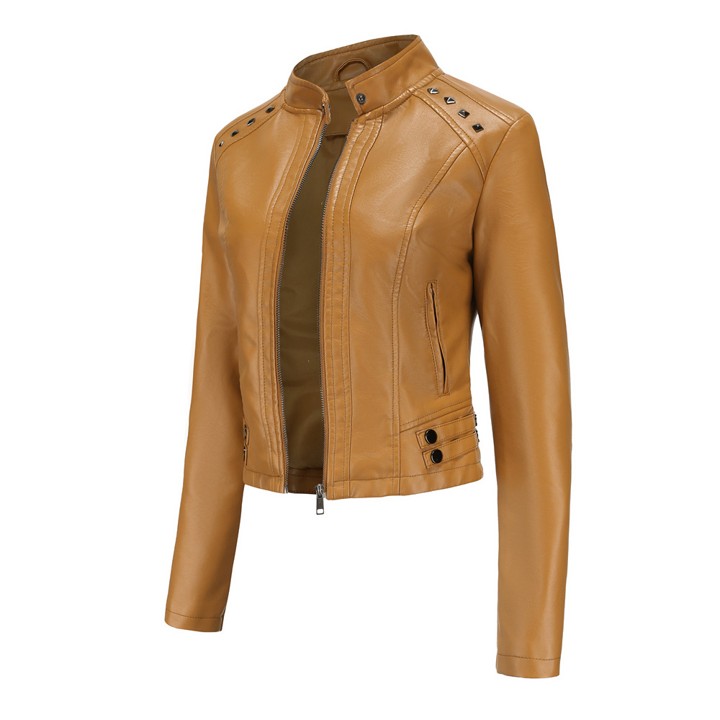
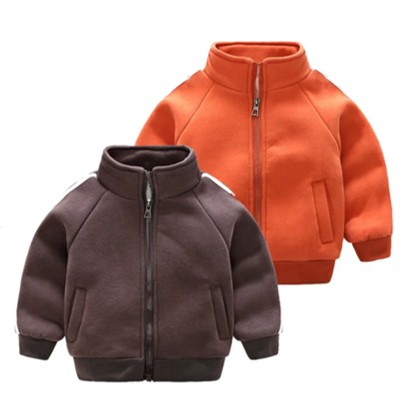
About Jacket Size Guide Chart
What is the difference between men's jackets and women's jackets ?
The differences between men's jackets and women's jackets go beyond just sizing—they include design, fit, functionality, and styling details. Here's a detailed breakdown:
1. Cut & Silhouette.
Women's Jackets: ① Tapered or cinched waist – Emphasizes curves. ② Shorter torso and sleeves (proportionate to height). ③ May have princess seams or darts for shaping.
2. Size grading differences.
3. Design & Styling Details.
About Pockets. Men's Jackets: Larger, functional (e.g., deeper); Women's Jackets: Often smaller, decorative, or angled for curves.
About Collars/Lapels. Men's Jackets: Wider, more structured; Women's Jackets: Narrower, softer, or stylized (e.g., ruffles).
About Colors/Patterns. Men's Jackets: Neutral tones (black, navy, gray); Women's Jackets: Wider variety (pastels, florals, metallics).
4. Functional Differences.
Women's Jackets: Often emphasize fashion over function (e.g., faux pockets, lightweight materials); Common styles: Pea coats, cropped jackets, faux-fur coats.
5. Shoulder & Sleeve Fit.
Women's Jackets: Narrower shoulders, shorter sleeves (adjusted for proportions).
6. Unisex/Gender-Neutral Jackets.
7. When Can You Swap?
Men wearing women's jackets: Rarely works (too narrow in shoulders/chest).