tabla de tallas internacional


Men's Suit Size Guide: The Complete Guide to a Perfect Suit Fit
A well-fitted suit is the cornerstone of a professional wardrobe. Unlike other clothing items, a suit requires precise measurements across multiple dimensions to achieve the polished, confident look that makes a strong first impression. This comprehensive guide walks you through every aspect of men's suit sizing.
Essential Suit Measurements
Chest: Measure around the fullest part of your chest, keeping the tape level and snug. This determines your suit jacket size. A proper suit jacket should have about 3 to 4 inches of ease beyond your actual chest measurement for comfortable movement.
Shoulder width: Measure from the edge of one shoulder to the other across your back. This is the most difficult measurement to alter, so getting it right from the start is crucial. The jacket's shoulder padding should end exactly at your natural shoulder point.
Jacket length: Measure from the base of your neck (where the collar meets the back) down to your desired jacket length. A well-proportioned jacket should cover your seat. The standard test is to let your arms hang at your sides and curl your fingers. The jacket hem should rest at the level of your knuckles.
Sleeve length: With arm slightly bent, measure from the shoulder point to the wrist bone. The jacket sleeve should end at the wrist, allowing about a quarter to half inch of shirt cuff to show.
Waist: Measure around your natural waist. The suit jacket's waist suppression should create a clean silhouette without pulling at the button.
Trousers waist and inseam: Measure your natural waist where the trousers will sit, and the inseam from crotch to the shoe heel. Suit trousers should have a slight break at the shoe.
Understanding Suit Size Labels
Men's suits are labeled with a chest size and length indicator. A "40 Regular" suit fits a 40-inch chest with standard jacket and sleeve length. "40 Short" has a shorter jacket body and sleeves. "40 Long" has a longer jacket body and sleeves. Common chest sizes range from 34 to 52 inches.
Suit Fit Types Explained
Classic/Traditional fit: Generous cut through the chest, waist, and sleeves. Best for conservative environments and men who prefer room to move. More fabric in the jacket and wider lapels.
Slim fit: Cut closer to the body with higher armholes, narrower lapels, and a shorter jacket. Creates a modern, fashion-forward silhouette. Best for lean body types.
Modern/Contemporary fit: A balance between classic and slim. Tailored through the waist but with enough room for comfort. The most versatile option for most body types.
Suit Size Conversion Chart
US/UK 34S = EU 44 = IT 44 | 36S = EU 46 = IT 46 | 38S = EU 48 = IT 48 | 40R = EU 50 = IT 50 | 42R = EU 52 = IT 52 | 44R = EU 54 = IT 54 | 46L = EU 56 = IT 56 | 48L = EU 58 = IT 58
Off-the-Rack vs. Made-to-Measure vs. Bespoke
Off-the-rack suits come in standard sizes and are the most affordable option, but may require alterations. Made-to-measure suits are customized from an existing pattern based on your measurements, offering better fit at a moderate price increase. Bespoke suits are crafted from scratch based on your unique measurements and preferences, providing the ultimate fit at the highest cost.
Common Suit Fitting Mistakes
Shoulders that extend beyond your natural shoulder line create a sloppy appearance. Sleeves that are too long hide your shirt cuffs and make the entire suit look oversized. A jacket that is too tight across the chest creates an X-pattern at the button. Trousers that are too long bunch at the shoe and break the clean line of the suit.
Frequently Asked Questions About Men's Suit Sizes
What is the average men's suit size? The most commonly purchased men's suit size in the United States is 40 Regular.
How much does it cost to alter a suit? Basic alterations like hemming trousers and adjusting sleeve length typically cost $50 to $150. More complex alterations like taking in the jacket waist or adjusting shoulders can cost $150 to $400 or more.
Should I buy a suit that fits my current weight or my goal weight? Buy a suit that fits your current body. It is much easier and less expensive to alter a suit slightly than to buy one that is too tight and hope you will not need it taken in.
How often should I replace my suits? A well-made suit that is properly cared for can last 5 to 10 years or more. Rotate between at least two suits to extend the life of each one.
Men's Suit Size Chart
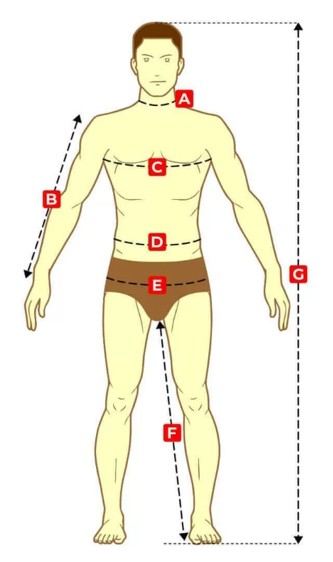
| Size | A & Neck (CM) |
B & Sleeve (CM) |
C & Chest (CM) |
D & Waist (CM) |
E & Hip (CM) |
F & Inseam (CM) |
G & Height (CM) |
|---|---|---|---|---|---|---|---|
| XS | 36.0 | 55.1 | 84.0 | 72.0 | 86.0 | 74.6 | 165.0 |
| S | 37.0 | 56.2 | 88.0 | 76.0 | 90.0 | 77.8 | 168.0 |
| S | 38.0 | 57.3 | 92.0 | 80.0 | 94.0 | 79.2 | 171.0 |
| M | 39.0 | 58.4 | 96.0 | 84.0 | 98.0 | 80.6 | 174.0 |
| M | 40.0 | 59.5 | 100.0 | 88.0 | 102.0 | 82.0 | 177.0 |
| L | 41.0 | 60.4 | 104.0 | 92.0 | 106.0 | 83.4 | 180.0 |
| L | 42.0 | 61.2 | 108.0 | 96.0 | 110.0 | 84.8 | 183.0 |
| XL | 43.0 | 62.1 | 112.0 | 100.0 | 114.0 | 86.2 | 186.0 |
| XL | 44.0 | 62.3 | 116.0 | 104.0 | 118.0 | 86.2 | 187.0 |
| XXL | 45.0 | 62.6 | 120.0 | 108.0 | 122.0 | 86.2 | 188.0 |
| Men's Suit Size Guide Chart Maker : iSizeChart.com | |||||||
| Size | US | UK | EU | Russia | Japan | Korea |
|---|---|---|---|---|---|---|
| XXS | 30 | 30 | 40 | 40 | 32 | 80 |
| XS | 32 | 32 | 42 | 42 | 34 | 85 |
| S | 34 | 34 | 44 | 44 | 36 | 90 |
| S | 36 | 36 | 46 | 46 | 38 | 95 |
| M | 38 | 38 | 48 | 48 | 40 | 100 |
| M | 40 | 40 | 50 | 50 | 42 | 105 |
| L | 42 | 42 | 52 | 52 | 44 | 110 |
| L | 44 | 44 | 54 | 54 | 46 | 115 |
| XL | 46 | 46 | 56 | 56 | 48 | 120 |
| XL | 48 | 48 | 58 | 58 | 50 | 125 |
| XXL | 50 | 50 | 60 | 60 | 52 | 130 |
| XXL | 52 | 52 | 62 | 62 | 54 | 135 |
| Men's Suit Size Chart Maker : iSizeChart.com | ||||||
About Men's Suit Size Guide Chart
How to choose a suitable men's suit ?
Choosing the perfect men's suit requires attention to fit, fabric, occasion, and personal style. Here’s a comprehensive guide to help you select the ideal suit:
1. Determine the Occasion.
Weddings/Events: Consider midnight blue, black, or light gray (season-dependent).
Casual/Semi-Formal: Linen, cotton, or tweed in lighter shades (beige, light gray).
2. Focus on Fit (The Most Important Factor).
Shoulders: Seams should align with your natural shoulder line (no wrinkles or pulling).
Chest: Jacket should button comfortably with slight room (one fist of space).
Sleeves: End at the wrist bone (showing 0.5 cm of shirt cuff).
Suit Length: Covers your seat (modern fits are slightly shorter).
Pants: Sit at your waist with a slight break at the shoes.
3. Choose the Right Fabric.
Super 100s–150s: Smooth, lightweight (ideal for business).
Flannel/Tweed: Heavier, textured (winter suits).
Linen/Cotton: Lightweight, casual (wrinkles easily).
4. Select the Color & Pattern.
Charcoal Gray: Professional, formal.
Black: Strictly for funerals/black-tie events.
Patterns: Solid, Safest for business; Pinstripes, Subtle power look (finance/law); Checks/Windowpane, Creative or casual settings.
5. Pick the Style Details.
Lapels: Notch, Standard for business; Peak, Formal (tuxedos/double-breasted suits).
Vents: Single Vent, Classic (U.S. style); Double Vent: European, more mobility.
6. Tailoring Is Essential.
Avoid altering shoulders/chest—buy these right first.
7. Try Before You Buy.
Move around (sit, raise arms) to test comfort.