tabla de tallas internacional


The ISO 216 international paper size standard is used in most countries worldwide (except North America). Understanding paper sizes is essential for printing, design, document preparation, and international business communication.
The A Series (ISO 216) - Most Common
The A series is the most widely used paper size system. All A sizes share the same aspect ratio of 1:√2 (approximately 1:1.414), meaning when you fold an A-size paper in half, you get the next smaller size with the same proportions. This unique property makes scaling between sizes distortion-free.
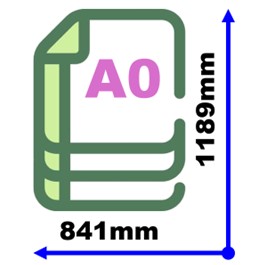
A0 (841 x 1189 mm / 33.1 x 46.8 in): The base size with an area of exactly 1 square meter. Used for large posters, architectural drawings, and technical diagrams.
A1 (594 x 841 mm / 23.4 x 33.1 in): Half of A0. Used for flip charts, large format printing, and detailed technical drawings.
A2 (420 x 594 mm / 16.5 x 23.4 in): Half of A1. Popular for medium posters, architectural plans, and large diagrams.
A3 (297 x 420 mm / 11.7 x 16.5 in): Half of A2. Common for spreadsheets, diagrams, small posters, and newspaper pages.
A4 (210 x 297 mm / 8.3 x 11.7 in): The standard office paper size worldwide. Used for letters, forms, reports, and everyday printing. Over 80% of the world uses A4 as their standard paper size.
A5 (148 x 210 mm / 5.8 x 8.3 in): Half of A4. Used for notebooks, flyers, small books, and notepads.
A6 (105 x 148 mm / 4.1 x 5.8 in): Half of A5. Used for postcards, small notebooks, and pocket books.
The B Series - Intermediate Sizes
The B series sizes fall between corresponding A series sizes. B sizes are commonly used for books, passports, and envelopes.
B4 (250 x 353 mm): Between A3 and A4. Used for books and Japanese government documents.
B5 (176 x 250 mm): Between A4 and A5. Very popular for books and notebooks in Asia, especially Japan and China.
The C Series - Envelope Sizes
C series sizes are designed to fit A series papers. A C4 envelope fits an A4 sheet flat, while a C5 envelope fits an A4 sheet folded once.
US Paper Sizes vs. ISO 216
The US uses Letter (8.5" x 11" / 216 x 279 mm), Legal (8.5" x 14"), and Tabloid (11" x 17") sizes. US Letter is slightly shorter and wider than A4, which can cause formatting issues when sharing documents internationally.
Frequently Asked Questions
Why is A4 the international standard?
A4's 1:√2 ratio allows scaling between sizes without distortion. This makes it ideal for copying, printing, and digital document exchange across different formats.
What size should I use for international business documents?
Use A4 for most international documents. If sending to the US, consider providing both A4 and Letter versions to ensure compatibility.
Paper Size Chart
About Paper Size Chart
How are different paper sizes defined?
Paper sizes are defined through standardized systems that vary by region and purpose. The most globally recognized systems are the ISO 216 standard (A/B/C series) and the ANSI/ARCH series (North America), alongside regional variations. Below is a clear breakdown:
1. ISO 216 Standard (International).
Key Series:
A Series (General printing). A0 = 1 m² area (841 × 1189 mm). Each smaller size (A1, A2, etc.) = half the longer side of the previous sheet. Example: A4 = 210 × 297 mm.
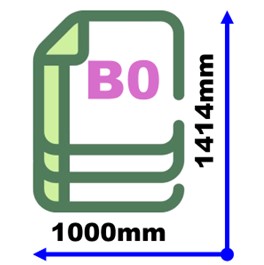
B Series (Intermediate sizes). B0 = 1-meter width (1000 × 1414 mm). B𝑛 = Geometric mean between A𝑛 and A(𝑛-1). Example: B4 = 250 × 353 mm (between A3 and A4).
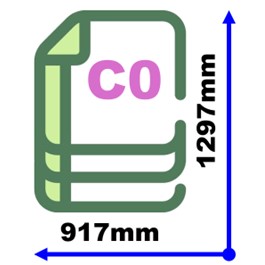
C Series (Envelopes). C𝑛 = Geometric mean between A𝑛 and B𝑛. Example: C4 envelope (229 × 324 mm) holds unfolded A4 paper.
Advantages:
Scalability (enlarge/reduce without distortion).
Nesting efficiency (two A4 sheets fit perfectly on A3).
2. ANSI/ARCH Series (North America).
① ANSI Series (General use):
Letter = 8.5 × 11 in (216 × 279 mm) – Most common in US offices.
Legal = 8.5 × 14 in (216 × 356 mm).
Tabloid/Ledger = 11 × 17 in (279 × 432 mm).
Larger sizes (ANSI A-E) created by doubling shorter sides:
ANSI A = Letter (8.5 × 11 in). ANSI B = Tabloid (11 × 17 in). ANSI C = 17 × 22 in, etc.
②. ARCH Series (Architectural drawings):
ARCH A = 9 × 12 in (229 × 305 mm).
Scales up to ARCH E6 = 36 × 48 in (914 × 1219 mm).
Limitations: No consistent aspect ratio (scaling requires cropping). Letter size differs from A4, causing compatibility issues.
3. Regional Standards.
Slightly different from ISO B.
Example: JIS B4 = 257 × 364 mm (vs. ISO B4 = 250 × 353 mm).
②. Chinese Standards:
Follows ISO A/B but includes unique sizes like "Kai" for books.
4. Specialty Sizes.
Untrimmed raw paper for printing.
SRA0 = 900 × 1280 mm (larger than A0 to allow for bleed).
②. Business Cards:
ISO 216: A8 (74 × 52 mm).
US Standard: 3.5 × 2 in (89 × 51 mm).
5. Why Standards Matter.
Design Efficiency: ISO’s √2 ratio enables seamless scaling.
Envelope Pairing: C series ensures precise fit for A series sheets.
Historical Roots: ISO based on Georg Lichtenberg’s 1786 principles; ANSI evolved from papermaking traditions.
Practical Tip: Always specify ISO A4 or US Letter when sharing documents internationally to avoid formatting issues. For printing, use SRA sizes to include bleed areas.
This system of paper sizing balances mathematical elegance (ISO) with historical practicality (ANSI), reflecting cultural and industrial priorities worldwide.