尺寸图表
国际尺寸图表


Children's feet grow rapidly, making regular measurement essential. Kids' shoe sizing differs from adult sizing and varies between toddlers, children, and youth.
Kids Shoe Size Categories
Toddler (US 4-10): Ages 1-3 years. Feet grow approximately half a size every 2-3 months.
Little Kids (US 10.5-3): Ages 3-6 years. Feet grow approximately half a size every 3-4 months.
Big Kids/Youth (US 3.5-7): Ages 6-12 years. Feet grow approximately half a size every 4-6 months.
How to Measure Kids' Feet
Have your child stand on paper with their heel against a wall. Mark the longest toe and measure. Always measure both feet. Add 0.5-1 cm for growth room.
When to Replace Kids' Shoes
Check your child's shoe fit every 2-3 months. Signs that shoes are too small: toes pressed against the front, red marks on feet, child complaining of foot pain, shoes showing excessive wear on one side.
Tips for Buying Kids' Shoes
Always have kids try on shoes in the afternoon. Look for flexible soles that bend at the ball of the foot. Avoid hand-me-down shoes that have molded to another child's foot shape.
Frequently Asked Questions
How often do kids need new shoes?
Toddlers may need new shoes every 2-3 months. School-age children typically need new shoes every 3-6 months. Teenagers may go 6-12 months between sizes.
Should I buy kids' shoes a size larger?
Buy shoes with about 0.5-1 cm of growth room (about a thumb's width at the toe). Buying too large can cause tripping and improper foot development.
Kids Shoe Size Chart
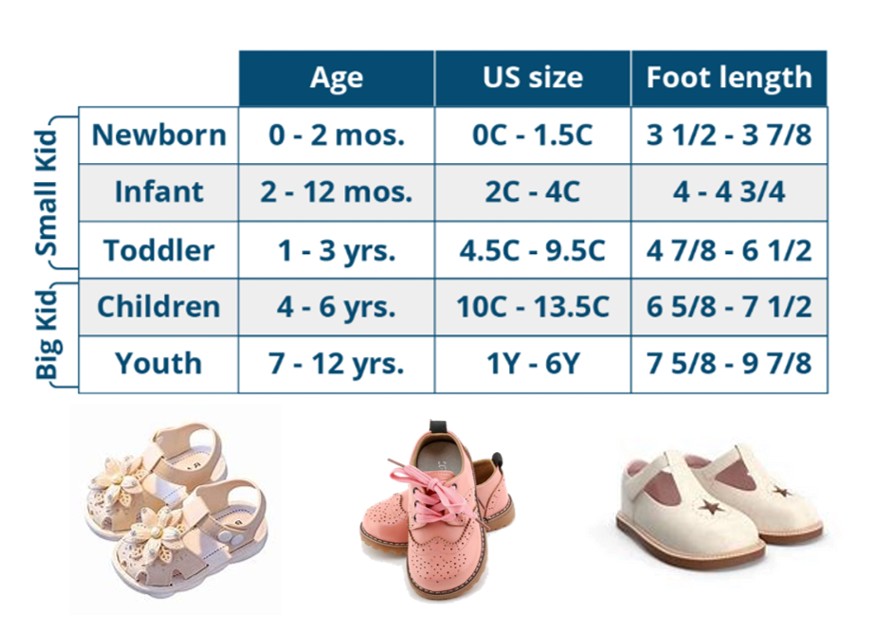
| Length (inches) | Length (inches) | Length (CM) | US Size | UK Size | Euro Size | JPN Size |
|---|---|---|---|---|---|---|
| 5" | 5" | 12.7 cm | 5.5 | 4.5 | 21 | 13.5 |
| 5 1/8" | 5.125" | 13 cm | 6 | 5 | 22 | 14 |
| 5 1/4" | 5.25" | 13.3 cm | 6.5 | 5.5 | 22 | 14 / 14.5 |
| 5 1/2" | 5.5" | 14 cm | 7 | 6 | 23 | 14.5 |
| 5 5/8" | 5.625" | 14.3 cm | 7.5 | 6.5 | 23 | 14.5 / 15 |
| 5 3/4" | 5.75" | 14.6 cm | 8 | 7 | 24 | 15 |
| 6" | 6" | 15.2 cm | 8.5 | 7.5 | 25 | 15 / 15.5 |
| 6 1/8" | 6.125" | 15.6 cm | 9 | 8 | 25 | 15.5 |
| 6 1/4" | 6.25" | 15.9 cm | 9.5 | 8.5 | 26 | 16 |
| 6 1/2" | 6.5" | 16.5 cm | 10 | 9 | 27 | 16.5 |
| 6 5/8" | 6.625" | 16.8 cm | 10.5 | 9.5 | 27 | 16.5 / 17 |
| 6 3/4" | 6.75" | 17.1 cm | 11 | 10 | 28 | 17 |
| 7" | 7" | 17.8 cm | 11.5 | 10.5 | 29 | 17 / 17.5 |
| 7 1/8" | 7.125" | 18.1 cm | 12 | 11 | 30 | 17.5 |
| Kids Shoe Size Chart Maker : iSizeChart.com | ||||||
Preschoolers (3-5 years): Look for shoes with good arch support and cushioning as they become more active. Prioritize breathable materials to prevent sweat and odor.
School-Age Kids (6+ years): Select shoes designed for specific activities (e.g., sports shoes for athletics, sturdy shoes for outdoor play). Ensure proper arch support and shock absorption for growing feet.
Measure Both Feet: Kids’ feet can differ in size; always measure both and choose shoes based on the larger foot. Use a professional foot-measuring tool or have a salesperson assist you.
Allow Room for Growth: Leave about a thumb’s width (½ inch or 1.25 cm) between the longest toe and the shoe’s tip. Avoid shoes that are too tight, as they can restrict growth and cause discomfort.
Check Width and Depth: Ensure the shoe isn’t too narrow or shallow, which can squeeze toes or cause blisters. The shoe should fit snugly around the heel without slipping.
Breathable Fabrics: Opt for natural materials like leather, canvas, or mesh to allow air circulation and reduce sweat.
Flexible Soles: The sole should bend easily at the ball of the foot to mimic natural walking motion. Avoid hard, stiff soles that restrict movement.
Durable Construction: Look for reinforced stitching and sturdy materials, especially for active kids.
Arch Support: Kids’ feet are still developing, so choose shoes with mild arch support to promote healthy alignment.
Cushioned Insoles: Soft, padded insoles absorb shock and reduce fatigue during walking or running.
Heel Support: A firm heel counter (the back part of the shoe) helps stabilize the foot and ankle.
Non-Slip Soles: Choose shoes with rubber or textured soles to prevent slips and falls, especially for toddlers.
Secure Closures: Velcro, laces, or buckles ensure the shoe stays on during play and provides a customizable fit.
Avoid Choking Hazards: Ensure decorations (like buttons or bows) are securely attached and won’t come off easily.
Everyday Wear: Choose versatile, comfortable shoes for school or casual outings.
Sports and Physical Activities: Select sport-specific shoes (e.g., running shoes for track, cleats for soccer) for proper support and injury prevention.
Weather Conditions: For rain or snow, opt for waterproof or water-resistant shoes with good traction.
Let them try on shoes and walk around to test comfort.
Allow them to choose from a few options to encourage independence and ensure they’ll wear the shoes happily.
Watch for signs of discomfort (e.g., red marks, blisters, or reluctance to wear shoes).
NKids’ feet grow quickly, so measure their feet every few months and replace shoes as needed.
关于儿童鞋码指南图表
儿童鞋码标准概述
儿童鞋码是表示童鞋大小的编号系统。儿童脚部发育快,鞋码变化频繁:
婴儿鞋码(0-2岁):中国码110-130,EUR 16-21,US 1-4。婴儿脚生长非常快,每2-3个月可能需要换鞋。
幼儿鞋码(2-5岁):中国码135-160,EUR 22-26,US 5-10。幼儿开始学步,鞋子需要良好的支撑。
儿童鞋码(5-12岁):中国码165-220,EUR 27-35,US 11-3。儿童脚部继续发育,需要定期测量。
青少年鞋码(12岁以上):开始使用成人鞋码系统。
儿童常见鞋码对照
以下是儿童常见鞋码的国际转换对照:
中国120 = EUR 20 = US 2 = 适合0-1岁
中国135 = EUR 22 = US 6 = 适合1-2岁
中国150 = EUR 24 = US 8 = 适合2-3岁
中国165 = EUR 27 = US 11 = 适合4-5岁
中国180 = EUR 30 = US 1 = 适合6-7岁
中国195 = EUR 32 = US 2 = 适合8-9岁
中国210 = EUR 34 = US 3 = 适合10-11岁
中国220 = EUR 35 = US 4 = 适合11-12岁
如何测量儿童脚长
准确测量儿童脚长是选择合适童鞋的关键:
1. 让孩子赤脚站在一张纸上
2. 用笔标记脚跟和最长的脚趾位置
3. 测量两点之间的距离,即为脚长
4. 两只脚都要测量,以较大的数值为准
5. 建议在下午测量,因为脚在一天中会略微膨胀
6. 儿童脚生长快,建议每3-4个月重新测量一次
童鞋尺码选择注意事项
预留生长空间:童鞋应预留约1-1.5厘米的生长空间。过大的鞋子会影响走路姿势,过小的鞋子会阻碍脚部发育。
鞋子类型:学步鞋需要柔软灵活,运动鞋需要良好支撑,正装鞋需要舒适合脚。
材质选择:选择透气性好的材质,如真皮、帆布。避免塑料等不透气材质。
定期检查:定期检查鞋子是否合脚,儿童可能不会主动说鞋子小了。
常见问题解答
儿童鞋多久需要换一次?
婴儿期(0-2岁)每2-3个月可能需要换鞋。幼儿期(2-5岁)每3-4个月检查一次。儿童期(5-12岁)每4-6个月检查一次。如果发现鞋子明显小了或孩子说挤脚,应立即更换。
可以给孩子买大一号的鞋吗?
可以适当买大一号(预留1-1.5厘米),但不要过大。过大的鞋子会影响走路姿势,增加摔倒风险,还可能导致脚部发育问题。
儿童应该穿什么类型的鞋?
学步期(1-3岁)选择柔软灵活的学步鞋。幼儿园期(3-6岁)选择支撑好的运动鞋。学龄期(6岁以上)根据活动类型选择运动鞋或正装鞋。