international size chart


Choosing the right mattress size is crucial for comfortable sleep. Mattress dimensions vary by country and type, and understanding these differences helps you make the right choice.
Standard Mattress Sizes
Twin (38" x 75"): Ideal for children and single adults in small spaces. Most affordable option.
Twin XL (38" x 80"): Same width as Twin but 5 inches longer. Perfect for tall individuals and college dorms.
Full/Double (54" x 75"): Good for single adults who want more space. Can fit two people but may feel cramped.
Queen (60" x 80"): The most popular mattress size. Comfortable for couples and fits in most bedrooms.
King (76" x 80"): Maximum width for couples. Each person gets a Twin XL's worth of space.
California King (72" x 84"): Narrower but longer than King. Best for tall individuals over 6'4".
Mattress Thickness Guide
Low Profile (6-8 inches): Budget-friendly, good for platform beds and children.
Standard (10-12 inches): Most common thickness. Good balance of comfort and support.
Thick (13-15 inches): Luxury feel with multiple comfort layers. May require deep-pocket sheets.
Ultra-Thick (16+ inches): Premium mattresses with extensive layering. Requires special deep-pocket sheets.
Frequently Asked Questions
What mattress size is best for couples?
Queen is the minimum recommended for couples. King provides optimal comfort with 38 inches of personal space per person.
How long do mattresses last?
Quality mattresses last 7-10 years. Signs of wear include sagging, lumps, and waking up with pain. Replace your mattress when it no longer provides proper support.
Mattress Size Chart
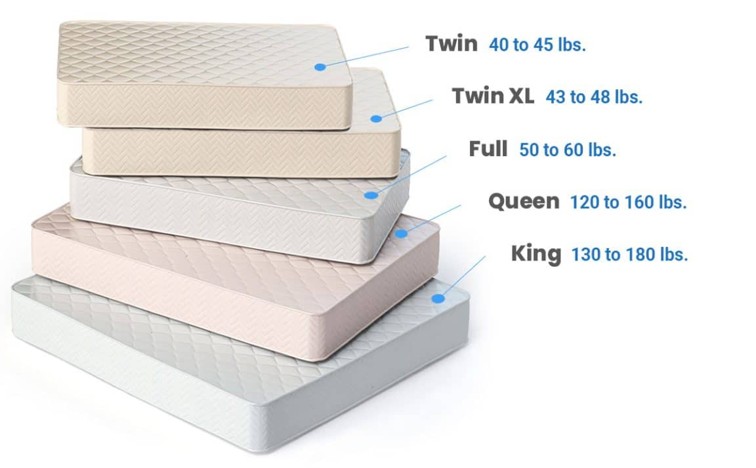
| Mattress Size | Size (inches) | Size (cm) | Suitable For |
|---|---|---|---|
| 28 × 52 | 71.1 × 132.1 | Babies or an infant. | |
| Small Single or Cot | 30 × 75 | 76.2 × 191 | A toddler which has outgrown a crib. |
| Twin Bed Size | 38 × 75 | 96.5 × 190.5 | |
| Twin XL or Single XL or TXL | 38 × 80 | 96.5 × 203.2 | Kids or taller adults who need an extra five inches compared to a Twin or Single. |
| 48 × 72 | 122 × 183 | People with a short stature tend to opt for this size as it doesn’t take up too much room. | |
| Super Single, Three-quarters, or 3/4 | 48 × 75 | 122 × 191 | Kids or adults who prefer a little extra width in exchange for less height. |
| 54 × 75 | 137 × 191 | Good for a single sleeper or someone with children or pets. It can be used for a couple who do not require much legroom. | |
| Full XL or Double XL | 54 × 80 | 137 × 203 | Plentiful for a single sleeper and ideal for couples who need extra legroom, but don’t have room for a queen-size bed. |
| Queen RV / Short Queen | 60 × 75 | 152.5 × 190.5 | A bed for a couple in a recreational vehicle (RV). |
| Queen | 60 × 80 | 152 × 203 | Most commonly purchased mattress size as it is the perfect size for most couples and provides plenty of room for single sleepers. |
| Olympic Queen | 66 × 80 | 168 × 203 | The next size larger than the queen for couples before they get a King. |
| California Queen – Waterbed Insert | 58 × 82 | 147 × 208 | Couples looking for a California queen-size waterbed. |
| Split Twin | 76 × 75 | 193 × 191 | Two x Twins combined measure 76”x 75” which offers the width of a King and the length of a Twin. |
| King | 76 × 80 | 193 × 203 | Excellent choice for couples who want plenty of room and personal sleeping space. Be sure to check your room to ensure it will fit in your bedroom. |
| King | 72 × 80 | 183 × 203 | This is the common RV King size. |
| California King – Waterbed Insert | 70 × 82 | 178 × 208 | 2 inches longer but 6 inches narrower than a standard king. Good for taller individuals in the market for a waterbed. |
| California King | 72 × 84 | 183 × 213 | 4 inches longer but 4 inches narrower than a king-sized bed. Great for taller individuals. |
| Texas King | 80 × 98 | 203 × 249 | People in the market for the largest standard bed-size that money can buy with an equally large room. |
| Wyoming King | 84 × 84 | 213 × 213 | This oversized mattress measures 7 feet by 7 feet. |
| Alaskan King | 108 × 108 | 274 × 274 | This is the largest mattress available. |
| Mattress Size Chart Maker : iSizeChart.com | |||
About Mattress Size Guide Chart
How do people of different age groups choose mattresses?
1. Infants & Toddlers (0-3 Years).
B: Key Features:
Extra-Firm: Prevents suffocation risk; should not conform to the head/face.
Waterproof & Hypoallergenic: Easy cleaning, protection against allergens and spills.
Certifications: Look for CertiPUR-US® (foam), GREENGUARD Gold, or OEKO-TEX® (fabric) for low emissions.
Perfect Fit: Mattress must fit the crib/toddler bed exactly with no gaps.
C: Materials: Often simple innerspring or firm foam cores with organic cotton covers.
2. Children (4-12 Years).
B: Key Features:
Medium-Firm Support: Balances comfort with proper spinal alignment during growth spurts.
Durability: Withstands jumping and play. Hybrids or pocketed coils are common.
Easy-Clean Covers: Waterproof or highly stain-resistant.
Transition: From toddler beds to twin/full sizes.
C: Materials: Innerspring, hybrids, or durable foams. Less focus on advanced pressure relief.
3. Teenagers (13-19 Years).
B: Key Features:
Support & Alignment: Crucial for developing spines; medium-firm to firm often recommended.
Durability: Needs to withstand study sessions, socializing, and changing weights.
Comfort & Style: Start expressing personal preferences (e.g., plush top, cool-to-sleep materials, aesthetics).
Budget: Often parents buying; balance cost with quality for longevity through college.
C: Materials: Hybrids (popular balance), durable memory foam, or supportive innerspring.
4. Young Adults (20s - Early 30s).
B: Key Features:
Value & Versatility: Often seek "best bang for buck." Bed-in-a-box options popular.
Comfort Exploration: Experimenting with firmness levels and materials (memory foam, latex, hybrid).
Lifestyle Factors: May prioritize ease of moving (lighter weight foam), temperature regulation (for active lifestyles), or motion isolation (for co-sleeping partners).
Durability: Looking for at least 7-10 years.
C: Materials: All-foam (especially online brands), hybrids, sometimes latex. Often medium-firm.
5. Adults (30s - 50s).
B: Key Features:
Targeted Support: Addressing back pain, shoulder/hip pressure points. Often higher-quality materials.
Partner Considerations: Motion isolation, dual-firmness (split kings), accommodating different sleep positions/weights.
Health Factors: Temperature regulation (hot sleepers, menopause), hypoallergenic materials (allergies), edge support.
Investment: Willing to spend more for quality, durability (10-15+ years), and health benefits.
Life Stages: May consider pregnancy pillows or future-proofing for potential back issues.
C: Materials: High-quality hybrids (most popular), latex (natural/organic focus, durability), premium memory foam. Wider range of firmness, often personalized.
6. Older Adults & Seniors (60+ Years).
B: Key Features:
Ease of Entry/Exit: Medium-firm to medium-soft often preferred; prevents "stuck" feeling. Good edge support crucial.
Pressure Relief: Softer comfort layers for hips/shoulders (arthritis, osteoporosis), but still supportive core.
Adjustable Bases: Increasingly popular for health benefits (acid reflux, sleep apnea, circulation, ease of sitting up).
Low Maintenance: Easy-to-clean covers.
Safety: Reduced risk of falls; height appropriate.
Health Specific: Support for chronic pain, incontinence protection (waterproof covers).
C: Materials: Often medium-firm hybrids with plush tops, high-quality memory foam or latex for pressure relief. Adjustable bases pair well.
7. Key Considerations Across All Ages.
Body Weight: Heavier individuals need firmer support/thicker mattresses; lighter individuals may prefer softer.
Health Conditions: Back pain, arthritis, allergies, temperature sensitivity dictate specific needs.
Partner Needs: Motion isolation, dual firmness, accommodating different preferences/weights.
Budget: Varies greatly within age groups.
Trial Periods & Warranties: Crucial for finding the right fit, especially for adults investing significantly.