internationale Größentabelle


Men's Shirt Size Guide: How to Measure and Choose the Perfect Fit
Finding the right shirt size is essential for looking polished and feeling comfortable throughout the day. Men's shirt sizes vary significantly between brands, regions, and even product lines within the same brand. This comprehensive guide covers everything you need to know about men's shirt sizing, from taking accurate body measurements to understanding international size conversions.
How to Measure Your Body for a Men's Shirt
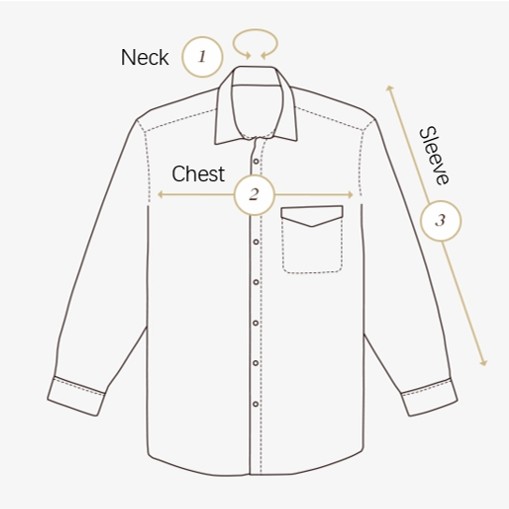
Accurate measurements are the foundation of a great shirt fit. You will need a flexible cloth measuring tape and, ideally, a helper for the most precise results. Here are the key measurements to take:
Neck circumference: Wrap the measuring tape around the base of your neck where the collar normally sits. Leave enough room to fit one finger between the tape and your skin. This measurement determines your dress shirt collar size, typically ranging from 14 to 19 inches in half-inch increments.
Chest circumference: Measure around the fullest part of your chest, keeping the tape level across your shoulder blades. This is the most critical measurement for dress shirts and casual button-downs. A well-fitting shirt should have about 2 to 4 inches of ease beyond your actual chest measurement.
Sleeve length: With your arm slightly bent, measure from the center back of your neck, across your shoulder, down to your wrist bone. This measurement ensures the cuff hits at the right spot when your arms are at your sides.
Shoulder width: Measure from the edge of one shoulder seam to the other across your back. This determines where the shirt's shoulder seam should sit, which is crucial for both formal and casual shirts.
Waist circumference: Measure around your natural waistline, typically at the narrowest point above your hips. For untucked shirts, this measurement determines how the shirt drapes at the waist.
Understanding Men's Shirt Size Labels
Men's shirts are labeled in several different ways depending on the type and brand:
Dress shirts use a two-number system: collar size by sleeve length, such as "15.5/34." The first number is the neck circumference in inches, and the second is the sleeve length in inches. Common collar sizes range from 14 to 18, and sleeve lengths from 32 to 37 inches.
Casual and polo shirts typically use the S/M/L/XL system. A size Small generally fits a 36-38 inch chest, Medium fits 39-41, Large fits 42-44, X-Large fits 45-47, and XX-Large fits 48-50. However, these ranges vary considerably between brands.
Fitted vs. regular cut: Many brands offer the same nominal size in different fits. Slim fit shirts have a narrower waist and tighter sleeves, while regular or classic fit offers more room through the body. Always check the fit description, not just the size label.
Men's Shirt Size Conversion Chart
When shopping internationally, you may encounter different sizing systems. Here is a general conversion reference:
US/UK collar size 14 = EU 36 = S | 14.5 = EU 37 = S/M | 15 = EU 38 = M | 15.5 = EU 39 = M | 16 = EU 40 = L | 16.5 = EU 41 = L/XL | 17 = EU 42 = XL | 17.5 = EU 43 = XL/XXL | 18 = EU 44 = XXL
Keep in mind that European shirts, especially Italian brands, tend to run smaller than American brands. Japanese brands often run even smaller. Always consult the specific brand's size chart when available.
Common Mistakes When Choosing Men's Shirt Sizes
Many men make the same mistakes when buying shirts. One of the most common is choosing a size based solely on S/M/L without considering the brand's specific measurements. Another frequent error is ignoring shoulder width, which can make even an expensive shirt look ill-fitting. Some men also overlook the difference between fitted and regular cuts, leading to shirts that are either too tight or too boxy. Finally, failing to account for shrinkage in cotton shirts can result in a shirt that no longer fits after the first wash.
Tips for the Perfect Shirt Fit
The shoulder seam should sit exactly at the edge of your shoulder bone. The collar should be snug enough to allow one finger between your neck and the collar when buttoned. Sleeve cuffs should end at the base of your thumb, with about half an inch of shirt cuff visible beyond a jacket sleeve. The shirt should drape smoothly over your chest without pulling at the buttons or creating excess fabric bunching at the waist.
Frequently Asked Questions About Men's Shirt Sizes
What is the average men's shirt size? The most commonly purchased men's shirt size in the United States is Large (42-44 inch chest) with a 15 to 15.5 inch collar and 34 inch sleeve length.
Should I size up or down for slim fit? Slim fit shirts are already cut narrower. If you are between sizes, sizing up in a slim fit usually provides a better result than sizing down in a regular fit.
How do I convert between US and European shirt sizes? US dress shirt sizes use neck and sleeve measurements in inches, while European sizes use chest circumference in centimeters. A US size 15/34 roughly corresponds to EU size 39 or a Medium.
What is the difference between dress shirt and casual shirt sizing? Dress shirts use precise neck and sleeve measurements for a tailored fit, while casual shirts use the simpler S/M/L/XL system with more generous proportions.
Men's Shirt Size Chart
| US International Size |
Sleeve Lenght (inches) | Neck Size (inches) | Chest Size (inches) | ||||
|---|---|---|---|---|---|---|---|
| XS | 31 - 32 | 13- - 13.5 | 32 - 34 | ||||
| S | 32 - 33 | 14 - 14.5 | 35 - 37 | ||||
| M | 32 - 33 | 15 - 15.5 | 38 - 40 | ||||
| L | 34 - 35 | 16 - 16.5 | 41 - 43 | ||||
| XL | 34 - 35 | 17 - 17.5 | 44 - 46 | ||||
| XXL | 35 - 36 | 18 - 18.5 | 47 - 49 | ||||
| 3XL | 35 - 36 | 19 - 19.5 | 50 - 52 | ||||
| Men's Shirt Size Guide Chart Maker : iSizeChart.com | |||||||
| US International Size |
Australia Size | Euro Size | French Size | Italian Size | Japan Size |
|---|---|---|---|---|---|
| XS | 34 | 35 - 36 | 37 - 38 | 38 - 39 | 0 |
| S | 36 - 38 | 37 - 38 | 39 - 40 | 40 - 41 | 1 |
| M | 38 - 40 | 39 - 40 | 41 - 42 | 42 - 43 | 2 |
| L | 40 - 42 | 41 - 42 | 43 - 44 | 44 - 45 | 3 |
| XL | 42 - 44 | 43 - 44 | 45 - 46 | 46 - 47 | 4 |
| XXL | 44 - 46 | 45 - 46 | 48 - 50 | 49 - 52 | 5 |
| 3XL | 46 - 48 | 47 - 48 | 52 | 54 | 6 |
| 4XL | 50 - 52 | 49 - 50 | 54 | 56 | 7 |
| Men's Shirt Size Chart Maker : iSizeChart.com | |||||
About Men's Shirt Size Guide Chart
What kind of shirt can enhance a man's taste?
A well-chosen shirt can significantly elevate a man’s style, sophistication, and overall taste. Here are key shirt styles, fabrics, and details that enhance a man’s appearance, depending on the occasion and personal aesthetic:
1. Classic Dress Shirts (Timeless Elegance).
Key Features:
Crisp White or Light Blue – Versatile, clean, and pairs well with suits or blazers.
Spread or Semi-Spread Collar – Adds refinement; ideal for ties or open-neck styling.
High-Quality Cotton (Egyptian, Pima, or Poplin) – Luxurious drape and breathability.
French Cuffs – For a sophisticated touch (pair with cufflinks).
Why It Works: A well-fitted dress shirt exudes confidence and professionalism.
2. Slim-Fit Oxford Shirts (Smart Casual).
KKey Features:
Button-Down Collar – Preppy and versatile (works with chinos or jeans).
Textured Fabric – Oxford cloth adds depth without being too formal.
Neutral Colors (Gray, Pale Pink, Navy) – Easy to layer under sweaters or jackets.
Why It Works: Balances relaxed and refined, making it a wardrobe staple.
3. Linen or Cotton-Linen Blend Shirts (Effortless Cool).
Key Features:
Wrinkled Texture – Embrace the "lived-in" look for a relaxed vibe.
Light Colors (Beige, Ivory, Pastels) – Keeps things breezy and stylish.
Unstructured Fit – Slightly loose for comfort but still tailored.
Why It Works: Linen conveys effortless sophistication and works well in warm climates.
4. Denim or Chambray Shirts (Rugged Charm).
Key Features:
Medium-Wash Denim/Chambray – More refined than dark denim.
Fitted Cut – Avoids a boxy, workwear feel.
Rolled Sleeves – Adds a touch of rugged elegance.
Why It Works: A denim shirt bridges casual and stylish, especially when paired with tailored trousers.
5. Patterned Shirts (Subtle Personality).
Key Patterns:
Micro-Checks or Gingham – Small patterns add depth without being loud.
Subtle Stripes – Vertical stripes elongate the torso.
Floral or Tropical (Minimalist Designs) – For bold yet tasteful statements.
Why It Works: Patterns inject personality while maintaining sophistication.
6. Black or Dark Gray Shirts (Modern Edge).
Key Features:
Matte Finish – Avoids a "club shirt" look.
Slim or Tailored Fit – Ensures a sharp silhouette.
Paired with Dark Trousers – Monochrome styling enhances sleekness.
Why It Works: A black shirt (when styled right) adds mystery and modernity.
7. Cuban Collar Shirts (Retro Sophistication).
Key Features:
Short Sleeves + Open Collar – Retro yet stylish.
Bold Prints (Floral, Geometric) – Works best with solid-colored trousers.
Lightweight Fabric – Keeps the look breezy.
Why It Works: The Cuban collar adds a playful yet refined touch.